
Power supply & battery faults
Failing internal power supplies, degraded battery packs, mains protection tripping and unexplained restarts.
Troubleshooting & repair
When a device fails, the only question that matters is how quickly it can be back in clinical use. We diagnose the fault, repair it on site where the equipment allows, move it to our workshop where it does not, and hand it back tested and documented either way.
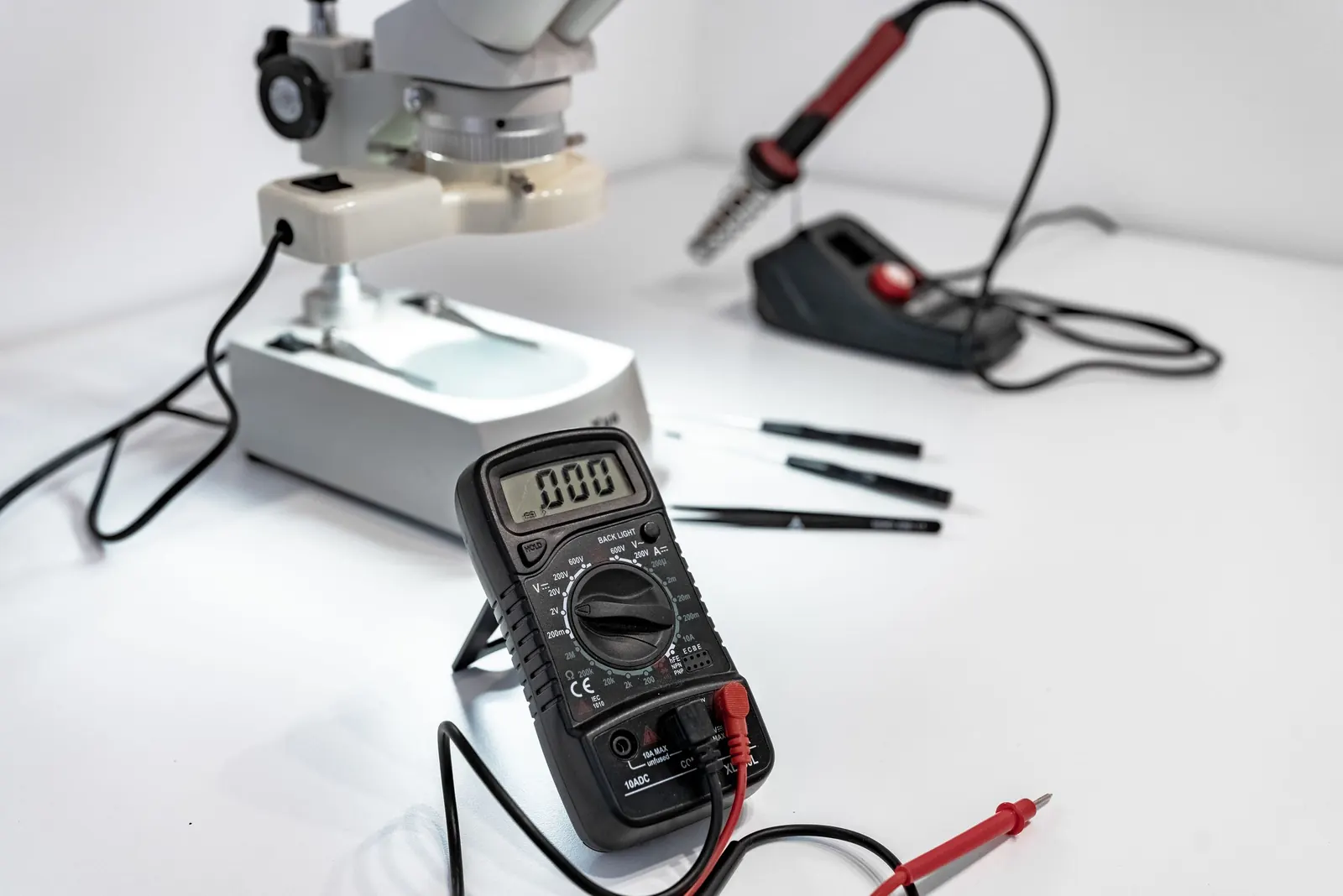
Troubleshooting & repair
Where a repair happens is a technical decision, not a commercial one. We make it at triage and tell you which it will be, along with what that means for turnaround.
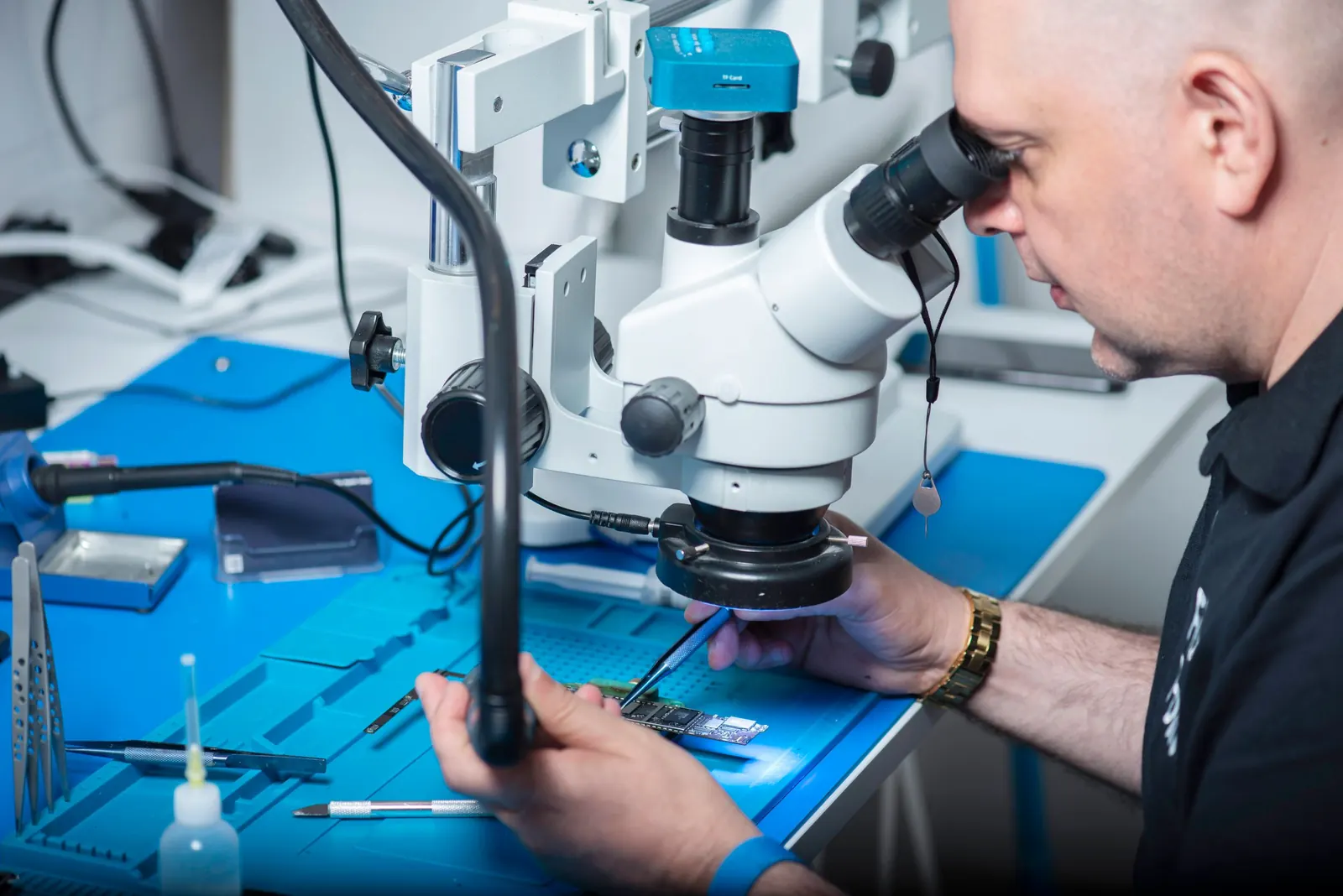
An engineer comes to the department with test equipment and the spare parts that fail most often. This suits installed, heavy or networked equipment, and faults that only appear in the real environment: power quality, gas supply, network configuration. Most electromechanical and electronic faults are resolved in a single visit.

The device comes to our bench, where we have full test gear, reference instruments and parts stock. This suits board-level electronics, precision mechanics, detector and sensor work, and anything that needs a long soak test before it can be trusted again. We arrange collection and return, and a loaner where one is available.
Different equipment fails in similar ways. These are the classes of fault our engineers work on most, and knowing which one you are looking at usually shortens the diagnosis.
Failing internal power supplies, degraded battery packs, mains protection tripping and unexplained restarts.
Readings drifting out of tolerance, alarms that no longer trigger correctly, probes and transducers past their service life.
Pumps, valves, motors, drive belts, hinges and seals: the parts that do the work and wear predictably.
Leaks, blocked lines, contaminated circuits and pressure loss in analysers, ventilators and dialysis machines.
Control boards, interface modules, display and imaging chains, and connectors damaged by repeated handling.
Failed updates, corrupted settings, lost network or HIS and LIS connectivity, and licence or calibration data loss.
Six steps from the moment you report a fault to the moment the device is back in service with its report signed.
You describe the fault and its clinical impact. We triage by phone or remote session the same working day and classify severity, because a meaningful share of faults are configuration issues that can be closed on the call.
On site or on the bench, we reproduce the fault, test against the manufacturer's service procedure and identify the failed component, rather than swapping modules until the symptom disappears.
You receive a written quotation listing parts, labour and expected turnaround before any chargeable work starts. Nothing is repaired without your approval.
Parts are ordered from the manufacturer or an authorised distributor. A quality-equivalent alternative is used only where the original has been discontinued, and it is stated explicitly in the quotation.
We complete the repair, then run functional and electrical safety testing and recalibrate wherever the repair affects a measured parameter. A device only leaves once it meets specification.
The device is reinstalled and handed back with a repair report listing the fault found, the parts fitted, the tests performed and their measured results, together with the warranty that applies to the work.
Repairs are queued by clinical impact. Critical means the device is down and there is nothing to use in its place.
| Severity | What it covers | Priority | Attendance and turnaround |
|---|---|---|---|
| Critical | Equipment down, no clinical substitute available, activity stopped or diverted. | Highest: handled before all other work | On-site attempt at the earliest possible slot; workshop repairs moved to the front of the queue |
| Degraded | Device runs but is out of tolerance, alarming, or has lost a function. | High: ahead of routine work | On-site visit or workshop repair scheduled at triage, with an expected date |
| Routine | Non-blocking faults, cosmetic damage, accessory replacement and planned checks. | Standard | Scheduled on a date agreed with you |
Turnaround depends on the fault, where the equipment is and whether spare parts are in stock, so we give you an expected date at triage or with the quotation, and offer a loaner where one exists. Business hours are Monday to Friday, 08:00 to 17:00 Beirut time.
What people ask when a device has just stopped working.
Troubleshooting & repair
Describe the device, the fault and how it is affecting your clinical activity. We triage the same working day and tell you what it will take to put it right.
You do not need a maintenance contract to request a repair. Contract customers are simply served ahead of the general queue.