UC-150 — main photograph
SturdyAvailability: Supplied to order

UC-150

Reference UC-150

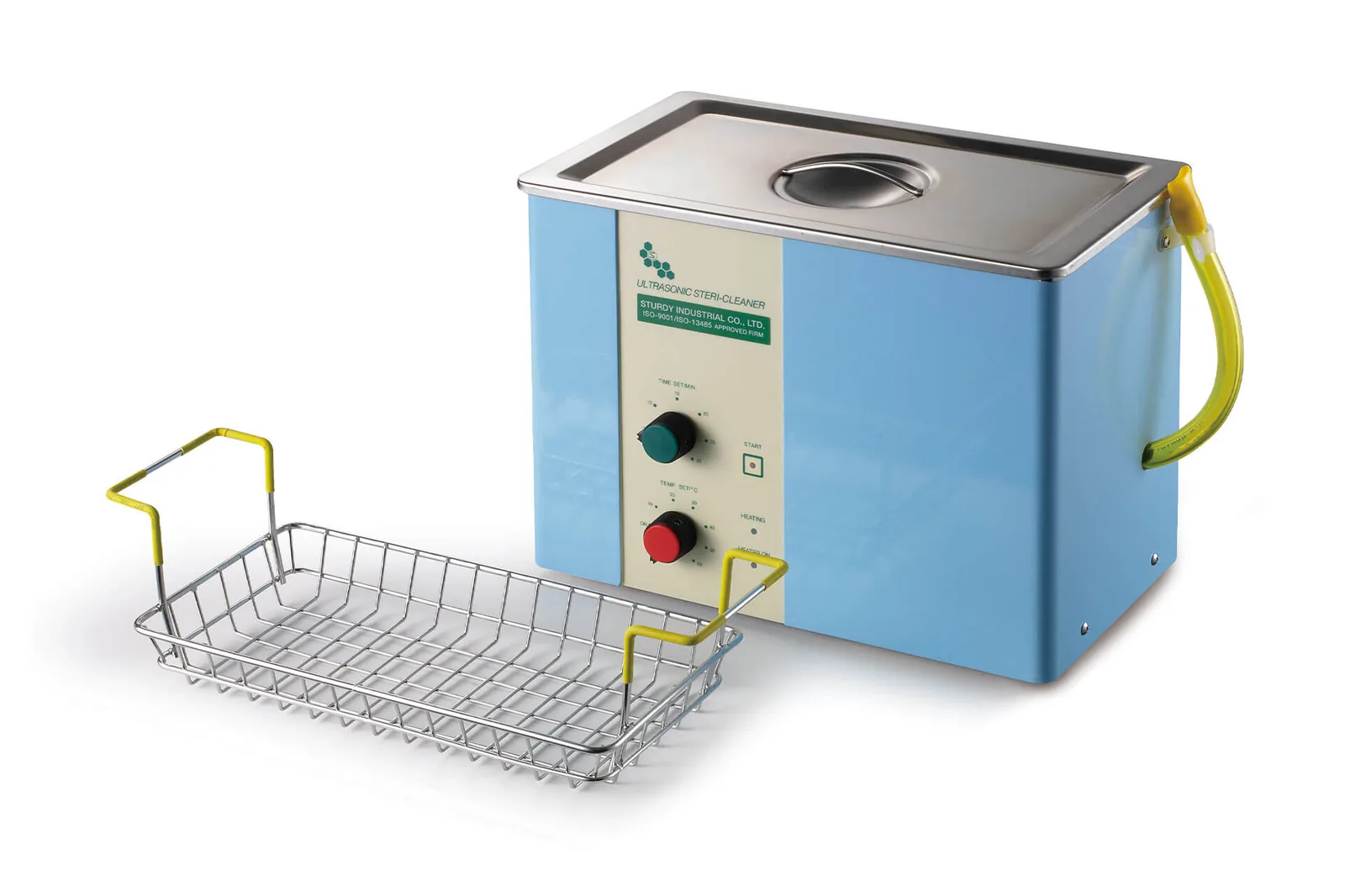
Simple, Practical Ultrasonic Cleaner 4.5 Liter Ultrasonic Cleaner An Ultrasonic wave of 46,000 cycles per second is generated through the cleansing liquid. The action of this longitudinal wave because dielectric pressure to build up, resulting in numerous micro-vacuum bubbles producing the cavity effect. When these bubbles explode, the force of their explosion removes the encrusted dirt, grime, or other undesirable substance, even in tiny, hard-to-reach corners. Its efficiency is remarkable.

Request a service for this equipment

Nothing is charged online. Every request is reviewed by an AxiTech engineer before you receive a quotation.

At a glance

Reference
UC-150
Category
Ultrasonic Cleaners
Product range
Ultrasonic Cleaners

Technical specifications

Lid Material
Stainless Steel #304
Power Supply
100V ~ 110V / 220V ~ 240V
Time Setting
1 ~ 30 min
Tank Material
Stainless Steel #304
Basket Material
Stainless Steel #304
Inner Tank Size
295 * 150 * 100 mm
Outer Tank Size
320 * 175 * 240 mm
Housing Material
Aluminum Alloy (Powder Coating)
Show 5 more specifications
Ultrasonic Power
150 W
Inner Tank Capacity
4.5 L
Temperature Setting
Room Temperature ~ 60 ℃
Ultrasonic Frequency
46 khz
Electric Heating Power
200 W
Service coverage

AxiTech maintains, repairs and supplies this equipment for hospitals, clinics, laboratories and imaging centres.

Maintenance contracts for Sturdy UC-150

A service visit on the Sturdy UC-150 covers the ultrasonic output, checked with a cavitation (foil) test, the transducers and generator, the heater, thermostat and timer, and the drain and tank condition.

Every visit includes calibration and performance verification, and closes with a documented maintenance report you can present during an accreditation audit. Spare-parts availability and a guaranteed response time are written into the contract, so a breakdown never leaves a department waiting for an answer.

Ultrasonic cleaners like the Sturdy UC-150 are normally checked by a technician once a year, with a simple foil test by the user at regular intervals to confirm that cavitation is still effective.

  • Cavitation checked with a foil or indicator test
  • Transducers, generator and tank inspected
  • Heater, thermostat and timer tested
  • Drain valve, basket and electrical safety checked

Discover our maintenance contracts

Planned preventive maintenance and calibration under contract

Troubleshooting and repair for Sturdy UC-150

When Sturdy UC-150 fails, our engineers start with a structured diagnostic: error codes, electrical and mechanical checks, and a functional test against the equipment’s own specification. That tells us whether the fault is a consumable, a worn part or a board-level failure before any part is ordered.

Straightforward faults are repaired on site so the department loses as little time as possible. Anything that needs a workbench, a full strip-down or a specialised spare part goes to our workshop and comes back only after a complete post-repair test and, where the equipment requires it, recalibration.

Faults we see most often on this type of equipment

Typical faults are weak or uneven cavitation from a failing transducer or generator, heaters that no longer reach temperature, and tanks damaged by running empty or by corrosive solutions.

Discover our troubleshooting and repair service

Diagnostics, corrective repair and spare parts in the workshop
Troubleshooting

How to troubleshoot Sturdy UC-150

Work through these checks before you escalate. They are the same first-line sequence our biomedical engineers run on arrival, and they either clear the fault or narrow it down enough that the intervention starts with the right spare part in the van.

  1. Capture the fault before you touch anything: write down the exact error code or message, the serial number from the rating plate, what the operator was doing and whether the fault clears on a restart.

  2. Fill the tank to the marked level with a cleaning solution suited to the instruments — running the unit empty or with plain water damages the transducers and cleans poorly.

  3. Degas fresh solution for a few minutes before loading, and never place items directly on the tank floor.

  4. Run a foil test: aluminium foil that shows no pitting after the test cycle points at weak cavitation.

  5. If the fault is still there, escalate with the evidence. Send AxiTech the model, serial number, error code and the checks you have already run, and an engineer will come back with a diagnosis, a repair quote and a spare-parts lead time for Sturdy UC-150.

What to send us when you report the fault

  • Manufacturer, model and serial number, from the rating plate
  • The exact error code or message, and the screen it appears on
  • When the fault started, how often it occurs and what triggers it
  • A photograph of the display or of the fault, and the last maintenance report

If the fault survives all five steps, stop using Sturdy UC-150 and open a repair request. Continuing to run equipment through a fault it cannot clear turns a component failure into a board-level one, and on devices used for diagnosis or therapy it puts the result — and the patient — in doubt.

Discover our troubleshooting and repair service

Buying and installing Sturdy UC-150

AxiTech supplies Sturdy UC-150 together with the accessories and consumables it needs to enter service. We handle importation, delivery and installation, then commission the equipment on site so that it is verified against its specification before the first patient or the first sample.

Installation is followed by training for the users and for your biomedical team, warranty registration, and — if you want it — a maintenance contract that takes over the day the warranty ends, so the equipment never spends a period without planned service.

Discover our equipment sales service

Delivery, installation, commissioning and user training
Product FAQ

Questions about the Sturdy UC-150

5 Liter Ultrasonic Cleaner An Ultrasonic wave of 46,000 cycles per second is generated through the cleansing liquid. The action of this longitudinal wave because dielectric pressure to build up, resulting in numerous micro-vacuum bubbles producing the cavity effect.